
The Intelligent Core: Intelligence embedded

Intelligence embedded, not added
Temenos addresses these challenges by embedding intelligence directly into the platform. This is fundamentally different from layering AI on top of existing systems. Instead of relying on external models or disconnected tools, Temenos integrates intelligence into the processes, data, and logic of the platform itself.
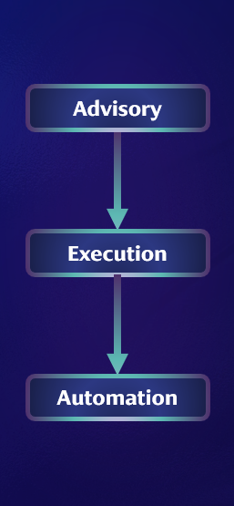
This ensures that AI is aligned with banking requirements, including compliance, accuracy, and control. Just as importantly, this approach allows banks to adopt AI in a gradual and controlled way. Capabilities typically begin in advisory roles. They guide users, provide recommendations, and support decision-making, while humans remain in control. As trust develops, these capabilities can expand to support execution and automation.
This progression is essential. It ensures that AI adoption strengthens control rather than weakening it, and that innovation is introduced without disruption. The objective is not to automate tasks, but to create a core that is more intelligent, more adaptive, and better able to support continuous change.
The foundation of an intelligent core
At the heart of our platform sits the Banking Knowledge Graph, which is a structured representation of banking expertise built over decades by Temenos and our banking community. It includes product definitions, workflows, regulatory rules, and operational logic, all encoded and available in real time, and structured for AI to query in real time.
The knowledge graph extends beyond core processes to encompass Temenos Digital applications and other capabilities on the Temenos Banking Platform, creating shared context across channels, interactions, and core processes.
Its role is to ensure that AI is grounded in verified domain knowledge, enabling decisions and actions that reflect how banking products, processes, and regulations operate. As a result, outcomes are consistent, explainable, and aligned with real-world banking requirements rather than probabilistic assumptions across the entire install, run and upgrade lifecycle. This is critical in environments where accuracy and compliance are non-negotiable.
With AI embedded into the platform, banks are interacting with systems in new ways. Users are no longer limited to navigating complex interfaces. Instead, they can engage through natural, conversational interactions that understand context and intent, and provide relevant responses.
Connectivity across the platform is enabled through Model Context Protocol (MCP). MCP standardizes how context is shared between systems, models, and workflows. This reduces integration complexity and allows intelligence to operate consistently across the environment.
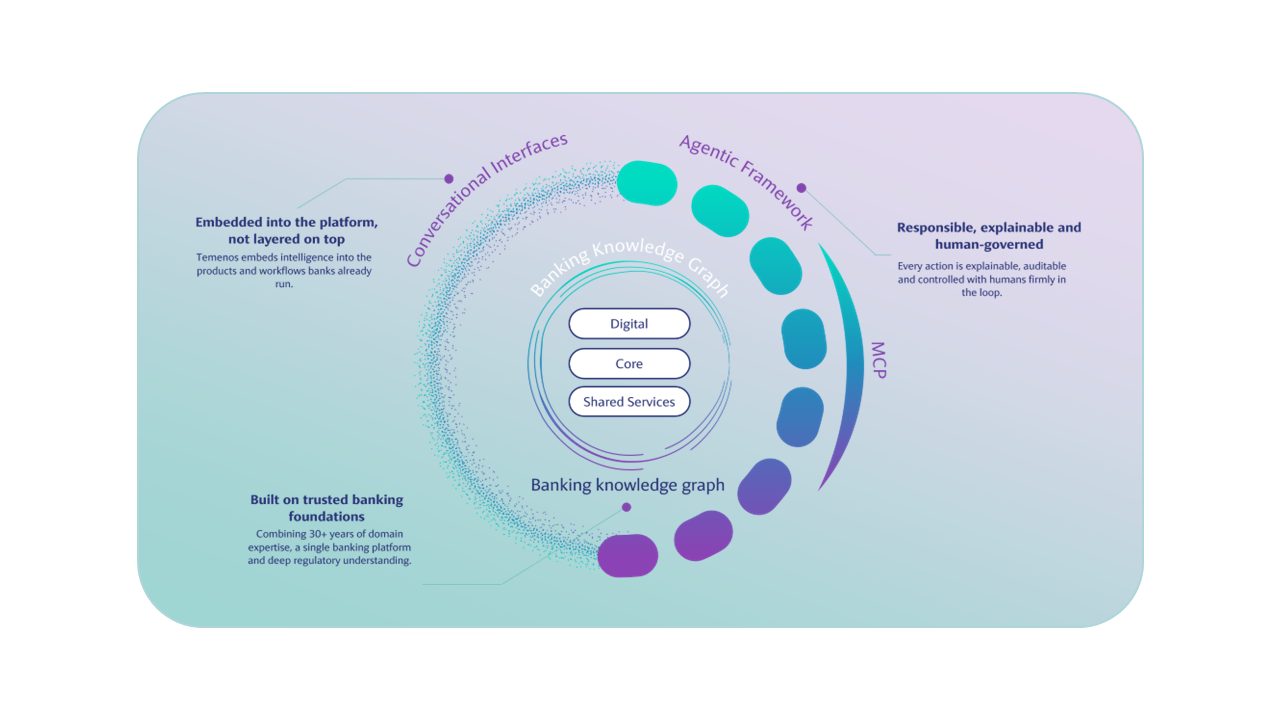
Execution is handled by the agentic framework, which orchestrates agents that perform specific tasks like reconciliation or KYC verification, orchestrated in end-to-end workflows. Crucially, these agents operate within controlled processes, ensuring that every action is auditable and every decision explainable.
Together, these elements create a platform where intelligence is embedded into how the core functions, rather than added as an external capability.

Progressive Modernization Starter Guide
Core modernization that stops at technology is just a cosmetic upgrade. Lasting success requires operating models and architecture that simplify change and strengthen competitiveness.