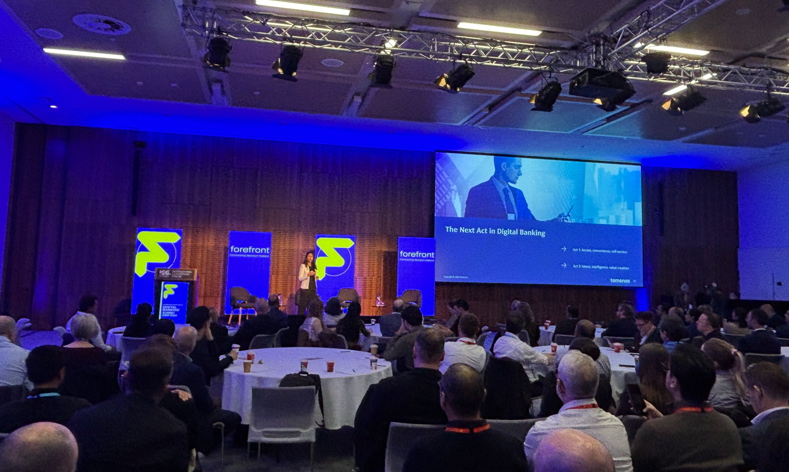
Digital banking is entering a new phase, and that shift was a clear thread running through Digital Banking Summit NSW in Sydney recently: the conversation has moved beyond apps and interfaces, toward a more fundamental question — how can banks actively help customers make better financial decisions?
Access is no longer the differentiator
Smooth logins, intuitive navigation, seamless payments — these used to be a competitive edge. Now they’re table stakes. Customers don’t really benchmark their bank against other banks anymore; the comparison point is the best digital experience they used that day, in any industry.
That’s driving a move from product-led to intent-led engagement. Rather than generic offers, the more effective approach is to understand context — post-salary spending patterns, a savings goal slipping off track, an SME’s seasonal cash flow cycle — and then tailor products and journeys accordingly Success starts to look less like adoption numbers, and more like customer outcomes and depth of relationship.
Ambition is rarely the gap — the Delivery Model often is
Most banks know what good looks like. The harder part is building it at the pace customers now expect. A few numbers from the session put that in perspective:
– More than half of IT projects globally exceed timelines or budgets — a pattern that showed up among Australian banks in the room too
– Roughly two-thirds of IT budgets globally go toward maintenance rather than innovation; Australian institutions tend to do somewhat better, though the tension still holds
– Around 65% of digital implementation effort typically goes into the front end alone — where specialist resourcing is scarcest and customisation creates the most friction
Regulatory and compliance review adds another layer — work a fintech might clear in weeks can take an established bank considerably longer. That’s not a criticism of how banks operate; it reflects a genuinely different risk bar. But it does mean the gap between what customers expect and what gets shipped by banks and when has been widening.
Where AI is starting to change the equation
This is the gap that platforms like Temenos Digital Conversational Studio, showcased at the Sydney session as part of its broader APAC rollout, are designed to address. The focus is on accelerating time to value so banks can focus on innovation. In practice, that tends to look like faster execution (build cycles compressing from months to days), rapid prototyping (ideas testable in minutes rather than across a sprint), and broader participation (product managers shaping experiences more directly, alongside developers rather than waiting behind them).
For banks managing both competitive pressure and talent constraints, that shifts where the ceiling sits. The caveat worth holding onto: while speed is important it cannot be at the expense of the high standards and regulatory requirements that banks need to adhere to. The Output from AI needs to be explainable, auditable and secure from the point it’s generated, not patched with governance afterward.
Complexity is the other half of the equation
Multiple segments, products, channels and partners — often across fragmented legacy systems — tend to multiply effort in ways that aren’t obvious until they’ve compounded. To make true innovation possible decoupling front-end experiences from back-end systems via API-first architecture is a must. This opens up faster launches, capability reuse across channels, and less compounding of technical debt with each new variant. This seems particularly relevant locally, where legacy infrastructure is often the real constraint on speed rather than any shortage of appetite for change.
This is an organisational shift as much as a technical one. Product teams get more direct involvement in shaping experiences, developers spend more time refining than building from scratch, and governance sits earlier in the lifecycle. There’s a downstream effect on IT investment too — less spent maintaining what exists tends to free up room for what’s next.
A starting point worth considering
None of this calls for a “big bang.” What landed best with the room was something more incremental: start with use cases where personalised engagement shows clear value, integrate via APIs without disrupting what’s running, scale through a shared platform rather than one-off projects, and build governance in from day one.
For Australian banks, the constraint has rarely been knowing where digital banking needs to go — it’s the operating model and delivery capacity to get there. Legacy systems, regulatory complexity and cost structures aren’t going away, but the tools to work within them, rather than wait them out, are now genuinely on the table.

Learn More About Temenos Conversational Studio
A fast, intelligent way to build digital banking journeys.