Key Takeaways
Hybrid Banking with Malasakit: This is emerging as the future model for Philippine thrift banks, blending human relationships, digital capabilities, and AI-driven intelligence.
Intelligent Banking: Enables Filipino thrift banks to enhance customer trust through the opportunities technology offer in modern core banking, digital channels, payments, and embedded AI.
Trust: Trust remains the ultimate differentiator and unique Filipino thrift banking distinctive, making governance, resilience, and responsible innovation critical for long-term success.
Introduction
The Philippine thrift banking sector has always played a unique role in the country’s financial system. For decades, thrift banks have helped families buy homes, entrepreneurs start businesses, and communities’ access financial services. Today, the thrift banking industry’s core lending breached P1 trillion as total assets reached P1.4 trillion, while its capital adequacy ratio remained above 17%. The sector’s total assets and loan volume both grew by 25% year on year as of April 2026. Yet as customer expectations evolve and technology transforms the banking landscape, the question facing the industry is how thrift banks can remain relevant while staying true to their core mission.
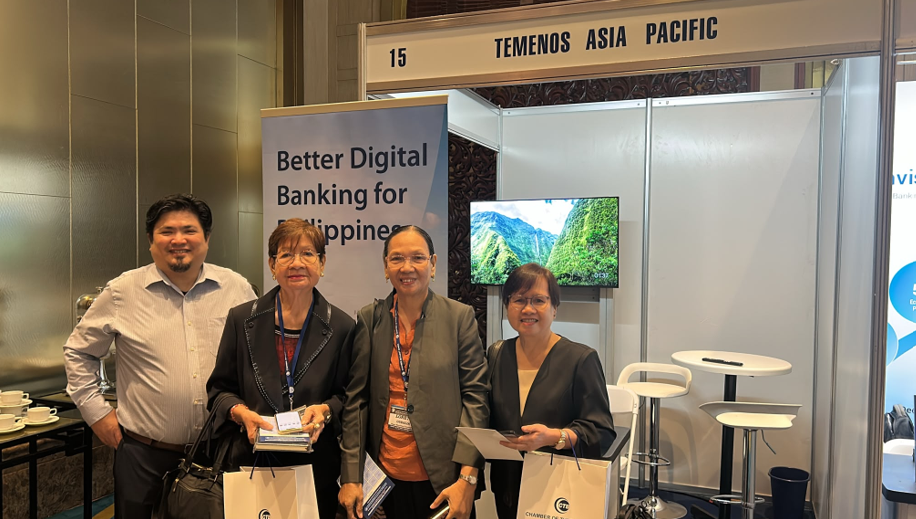
That question was the pulse of the industry at the 52nd Chamber of Thrift Banks (CTB) Convention in Manila. Circumspectly, a clear message emerged from the Convention – the future of thrift banking will be defined by the successful combination of trust, technology and intelligence.
Staying True to Customer Relevance
In his opening address, CTB President Jaime Valentin L. Araneta reminded delegates that the thrift banking sector’s mission remains as relevant today as ever. Promoting financial security, enabling economic mobility, and improving quality of life via accessible banking services continue to be the lifeblood of thrift banking. While technology and business models evolve, customer trust remains the industry’s greatest asset. This theme was echoed by BSP Deputy Governor Lyn I. Javier, who described customer relevance as “the ability to continuously understand and respond to changing customer needs while remaining grounded in ‘malasakit’, the genuine concern for the wellbeing of customers and communities.”
This focus on trust is particularly important as Filipino consumers increasingly expect banking experiences that are convenient, secure and personalized. Be it a loan application, making a payment, or opening an account, Filipinos expect the same level of seamless experiences as they receive in other aspects of their digital lives. The challenge for banks is therefore not simply delivering digital services. It is using technology to strengthen customer relationships and deepen trust.
From Digital Banking to Intelligent Banking
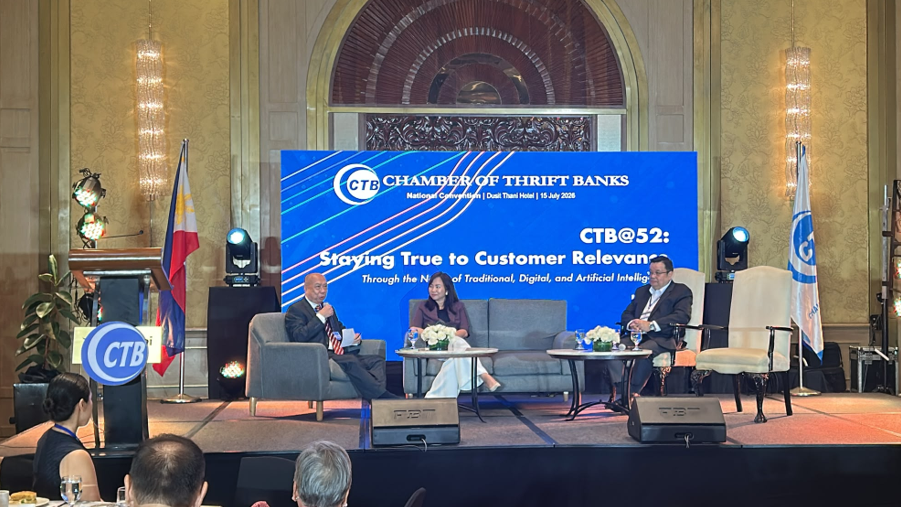
One of the most compelling discussions at the convention centered on what comes after digital transformation. The convention theme, “Staying True to Customer Relevance Through the Nexus of Traditional, Digital and Artificial Intelligence”, articulated a future in which relationship banking, digital capabilities and artificial intelligence work together instead of against each other. Mr. Araneta described this emerging model as “hybrid banking.”
Deputy Governor Javier reinforced this idea by highlighting the unique strengths of each component for customer experience. Traditional banking provides trust, judgment, and human relationships. Digital banking delivers efficiency, convenience and accessibility. Artificial intelligence improves risk management, fraud detection, and customer understanding. The greatest value is created when these components synergize together.
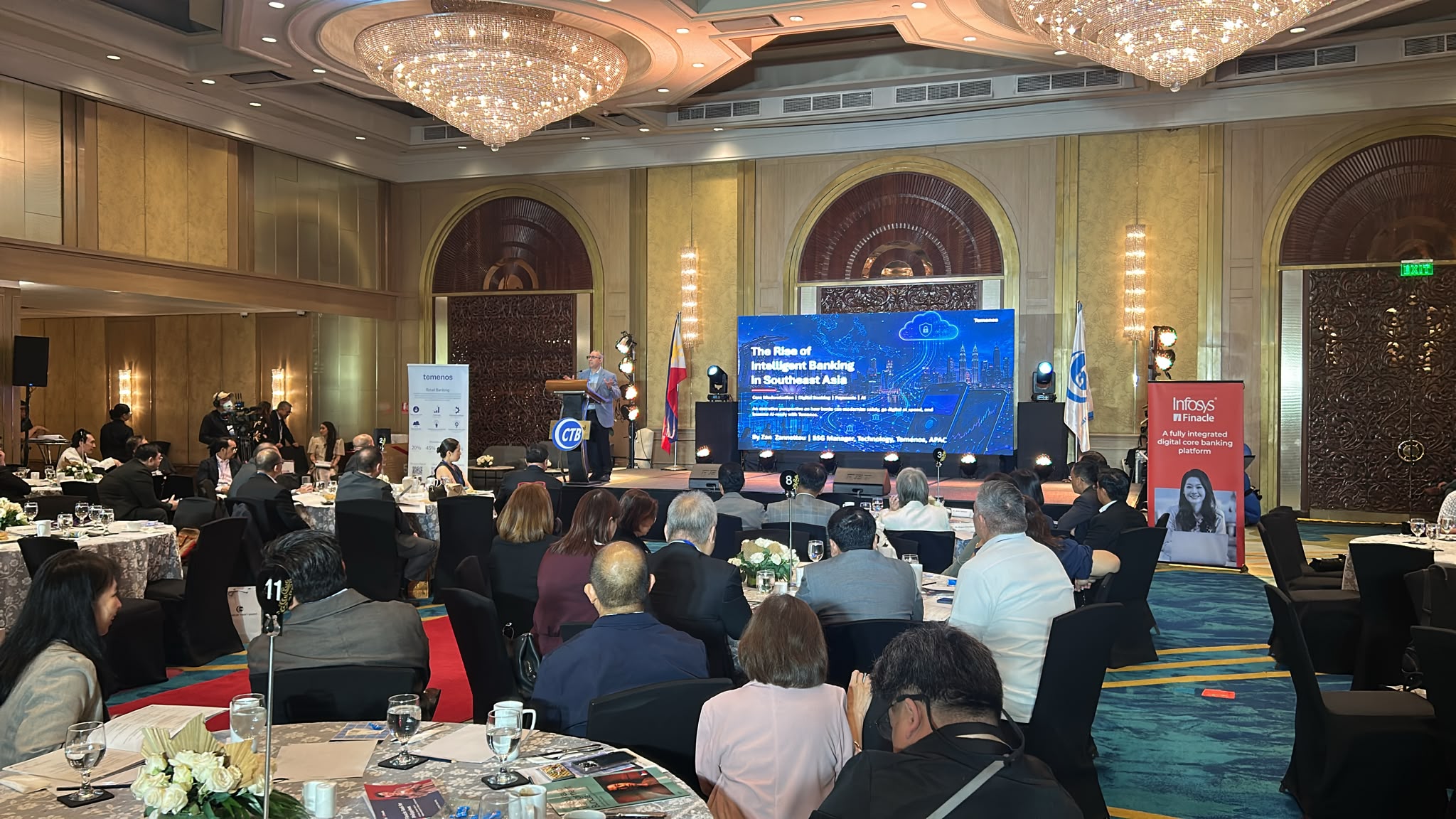
At Temenos, we see this evolution as the rise of Intelligent Banking. Across Southeast Asia, the banking industry has largely completed its first phase of digital transformation. Mobile banking is now mainstream, digital payments continue to accelerate, and customers increasingly expect real-time interactions. The next phase is about embedding intelligence across the banking value chain.
Intelligent banking is built on four interconnected pillars:
- Modern core banking platforms.
- Digital banking experiences.
- Modern payments infrastructure.
- Embedded artificial intelligence.
The true value of artificial intelligence lies not in standalone experimentation, but in solving real banking challenges. Enabled by cloud technology, solutions such as Temenos FCM AI Agent show how embedded AI can help banks automate complex compliance decisions, reduce false positives, and strengthen operational resilience. This foundation is built on maintaining transparency, governance, and risk controls that underpin trust in modern banking.
Together, these capabilities enable banks to launch products faster, deliver more personalized services, improve operational efficiency, and scale more effectively. More importantly, they allow institutions to enhance customer relationships rather than replace them. The future of Filipino thrift banking should not be focused on the competition between digital banking and traditional banking. The future is intelligent banking, where technology strengthens the trust that defines thrift banking, enabling malasakit at scale.
Modernization Without Disruption
While the destination may be clear, many banks still grapple with getting there. Modernization remains a priority, but the risks of large-scale transformation continue to concern financial institutions. Filipino regulators have consistently emphasized that innovation must be balanced with operational resilience and strong governance.
At Temenos, our discussions with banks across Southeast Asia reveal a growing preference for progressive modernization strategies. Rather than replacing entire banking ecosystems through a high-risk “big bang,” institutions are increasingly modernizing incrementally. The focus is firstly on strategic business domains such as lending, payments, or customer engagement. Modern capabilities can then be integrated progressively as the bank progresses in their innovation journey. Cloud-native technologies and SaaS delivery models are further enabling this approach, allowing banks to adopt innovation incrementally while reducing infrastructure complexity and accelerating access to new capabilities. This enables banks to reduce implementation risk, accelerate business outcomes, and maintain continuity for customers and employees.
For thrift banks in particular, progressive modernization allows for innovation in tandem with business priorities. This preserves the operational stability that customers and regulators expect.
Innovation Must Be Accompanied by Trust
If there was one topic that consistently surfaced throughout the convention, it was the importance of maintaining trust amidst accelerating innovation. Deputy Governor Javier emphasized that digital transformation and AI adoption must be supported by strong governance. She highlighted the BSP’s principles for responsible AI, built around Sustainability, Transparency, Accountability, Responsibility and Security. This emphasis was reinforced by the Philippine Deposit Insurance Corporation (PDIC), who introduced the proposed Risk-Based Assessment System (RBAS). The framework aims to align deposit insurance assessments with a bank’s governance standards and risk management capabilities.
More significantly, RBAS signals a broader shift in thrift banking. Strong governance, prudent risk management, and institutional resilience are increasingly being recognized and rewarded as strategic differentiators for thrift banks. This has crucial implications for thrift banks looking at AI or digital innovation initiatives. Such initiatives must be supported by transparency, human oversight, and robust governance frameworks.
At Temenos, we believe these principles are essential for the future of banking AI. Intelligent banking requires AI that is explainable, embedded within banking processes, designed for banking-specific use cases and subject to appropriate human control.
As banking becomes more intelligent, trust becomes even more important.
Building the Next Chapter of Filipino Thrift Banking
Perhaps the most encouraging takeaway from the CTB Convention was the remarkable alignment across regulators, industry leaders and technology providers. The Chamber of Thrift Banks emphasized customer relevance and community trust, the BSP emphasized responsible innovation, resilience and governance, and the PDIC emphasized sound risk management, transparency and financial strength.
Taken together, these perspectives point toward a common vision for the future – a banking sector deeply rooted in human relationships while embracing the opportunities from modern technology. For Temenos, that future is Intelligent Banking: a future where modern core banking, digital experiences, payments and embedded AI work together to help thrift banks become more agile, resilient and customer centric. A future where innovation and trust reinforce one another. It is a future where Philippine thrift banks continue to play their vital role in supporting individuals, businesses and communities across the country, as they have resiliently done across the past five decades.
The opportunity ahead is not simply digital transformation. It is the creation of a new model of banking, one that combines malasakit, modernization, and intelligent technology to deliver sustainable growth and enduring customer relevance.
Feel free to reach out to us for a conversation:
Eduardo Jr Fernandez
Country Director, Temenos Philippines
Email: [email protected]
Zannettos Zannettou
BSG Manager – Technology, Asia Pacific, Temenos
Email: [email protected]