EastWest Bank's Journey to Cloud-Native Banking
A Fireside Chat Perspective on Philippine Banking Modernization
By Zannettos Zannettou, BSG Manager Technology, Temenos
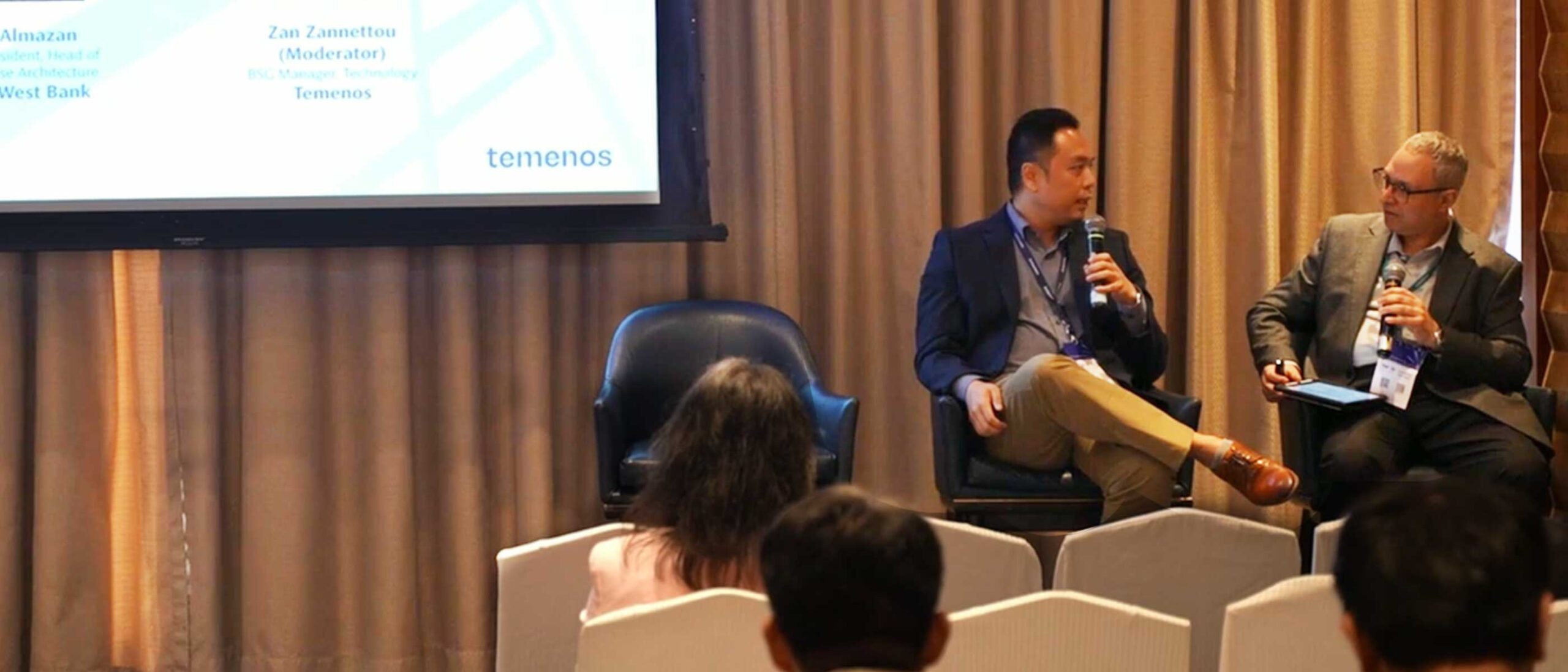
At our recent Temenos Regional Forum in Manila, I had the privilege of moderating what became one of the most insightful conversations about strategic banking transformation I’ve witnessed in years. My fireside chat with Jet Almazan, Vice President and Head of Enterprise Architecture at EastWest Bank, revealed the sophisticated thinking behind one of the Philippines’ most ambitious SaaS transformations.
EastWest Bank’s journey from legacy on-premises infrastructure to cloud-native SaaS implementation represents far more than a technology upgrade. It exemplifies how forward-thinking institutions can position themselves for sustainable growth in the rapidly evolving ASEAN banking landscape, where established players must leverage cloud-native architectures to drive innovation and operational excellence.
The strategic imperative
EastWest Bank, part of the Filinvest group, operates across multiple segments—universal banking, rural banking, and digital banking through their Komo platform. Having recently launched their Easy Way mobile application, they needed a technology foundation capable of supporting their CEO’s ambitious vision to become one of the Philippines’ leading universal banks.
What impressed me most was Jet’s honest assessment of their challenges. Legacy systems were hindering their digital transformation efforts, creating operational bottlenecks that inhibit growth momentum precisely when institutions need to respond rapidly to market opportunities. These outdated systems were making it difficult to deliver personalized experiences while putting pressure on teams to innovate and engage customers effectively.
“We need a platform to be able to scale with our ambition,” Jet explained to our forum delegates. “Temenos being a SaaS, being on cloud will enable us to scale with our product offerings and customer base without the hassle of maintaining on-premises infrastructure.”
This statement encapsulates a fundamental shift I’m observing across ASEAN markets. Banks are recognizing that agile and scalable solutions enable them to balance innovation with cost efficiencies while eliminating traditional constraints. The SaaS model provides the choice and flexibility institutions need to focus on core business activities, ultimately supporting faster product time-to-market and improved operational efficiency.
Confronting legacy reality
One of the most valuable aspects of our conversation was Jet’s candid assessment of their legacy environment challenges. His transparency about technical debt provides essential lessons for industry peers facing similar situations.
“One of the reasons why we’re stuck is because we built a lot of customizations within our environment,” Jet shared with remarkable honesty. “We have thousands by the way.”
This acknowledgment highlights a challenge I encounter frequently across the industry. When banks accumulate customizations over time, they create technical debt that significantly impacts their ability to evolve. These legacy systems create security and compliance risks while making it challenging to manage IT complexity effectively.
EastWest Bank’s strategic response centers on what Jet calls a ‘back-to-core’ philosophy that prioritizes standard processes and configurations over custom development. “We want to adopt the processes as much as possible,” he explained. “If we can do all of our customizations as configuration, that’s a better approach so we can keep the core evergreen.”
This approach represents a fundamental shift in implementation strategy, enabling evergreen system maintenance and simplified upgrade paths. The cloud-native, modular technology equips bank staff with modern tools to boost productivity while enabling seamless omnichannel experiences for their customers.
Partnership over procurement
What resonated deeply during our discussion was EastWest Bank’s emphasis on partnership rather than vendor relationships. Their decade-long relationship with Temenos, dating back to 2014, exemplifies how strategic partnerships drive successful transformation.
“Creating or selecting a partner rather than a vendor if you’re delving into a SaaS environment,” Jet emphasized. This perspective reflects a mature understanding that successful transformation requires more than technology – it demands ongoing collaboration and shared strategic vision.
Their comprehensive evaluation extended beyond core banking functionality to encompass auxiliary systems, reinforcing the value of ecosystem continuity through API-based systems and seamless integrations.
Strategic guidance for leaders
When I asked Jet what advice he would give to fellow enterprise architects, his response emphasized strategic clarity above all else.
“You need to delve into this transformation with a clear vision in mind,” he advised our delegates. “You need to know what your strategy is and connect it to how you’re architecting your environment. Don’t just say you want to move to the Cloud. You have to have reasons for moving to the Cloud.”
This resonates strongly with my experience across numerous transformation projects throughout the region. Banks that achieve meaningful change start with clear strategic objectives, not technology preferences. They understand that secure, modular, and integrable technology platforms offer sophisticated configuration capabilities while providing cost-effective process automation that reduces operational complexity.
We’ve been with Temenos since 2014 and we’ve experienced that partnership with them. We know that if we go into a SaaS type of engagement with them, we will still experience that kind of partnership with Temenos.” – Jet Almazan, Vice President, Head of Enterprise Architecture, EastWest Bank
Future-proofing through innovation
Looking toward emerging technology capabilities, Jet expressed confidence in Temenos’s investment in artificial intelligence. “If you go SaaS, those products will be available to you eventually and you can take advantage of those products.”
This forward-looking perspective demonstrates how cloud-native SaaS platforms position banking institutions to capitalize on emerging technologies without additional infrastructure investments. The proven banking solutions with their modular, low-code architecture enable banks to accelerate product time-to-market while maintaining system resilience and operational efficiency.
Reflections on transformation
EastWest Bank’s transformation journey represents strategic repositioning for sustainable growth in the evolving ASEAN banking landscape. Their experience demonstrates how meaningful transformation starts from the core, enabling faster, smarter, and more personalized service delivery.
What strikes me most about this conversation is how it exemplifies the maturity of banking leadership in the Philippines. Jet’s strategic thinking, combined with his willingness to share both challenges and successes, reflects the kind of transparency that advances our entire industry.
For banking leaders considering similar transformations, EastWest Bank’s experience offers practical guidance: start with clear strategic vision, embrace modular modernization approaches, prioritize partnerships over procurement relationships, and choose platforms that can evolve with your ambitions.