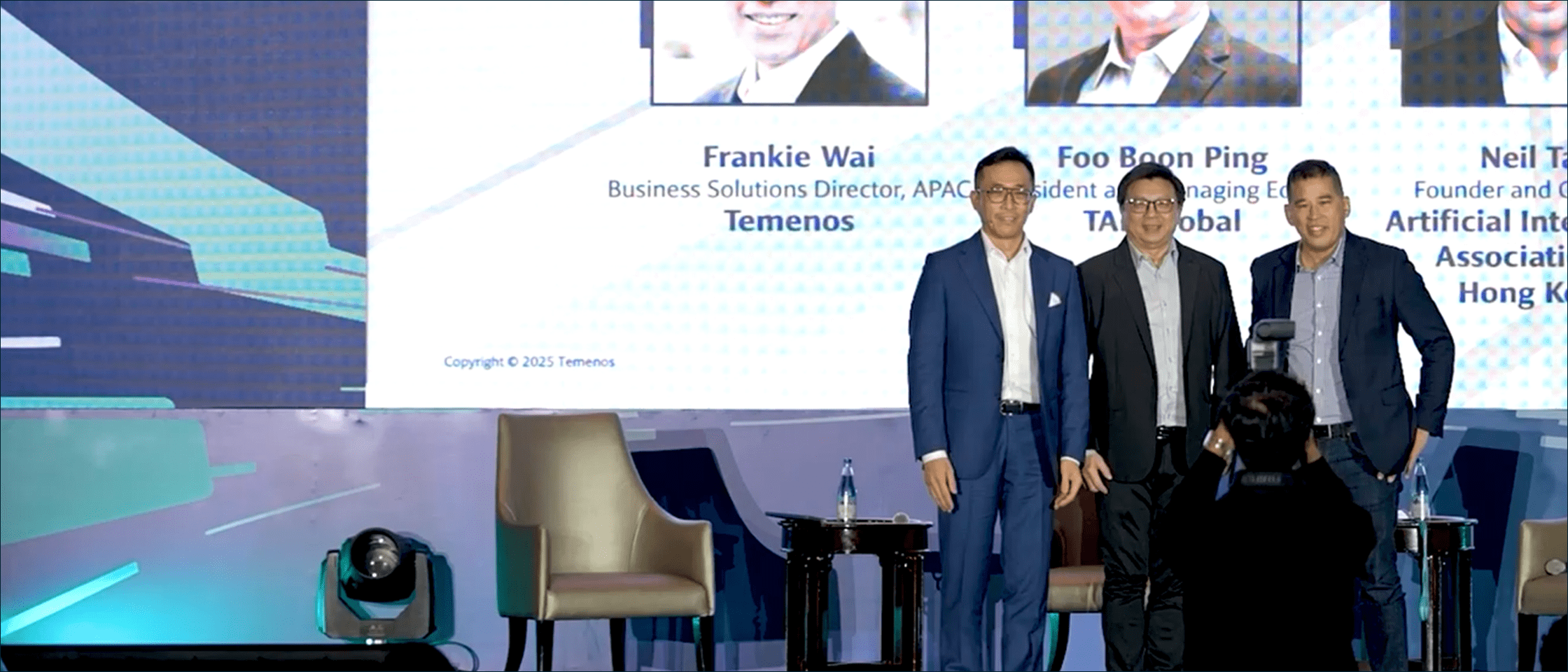
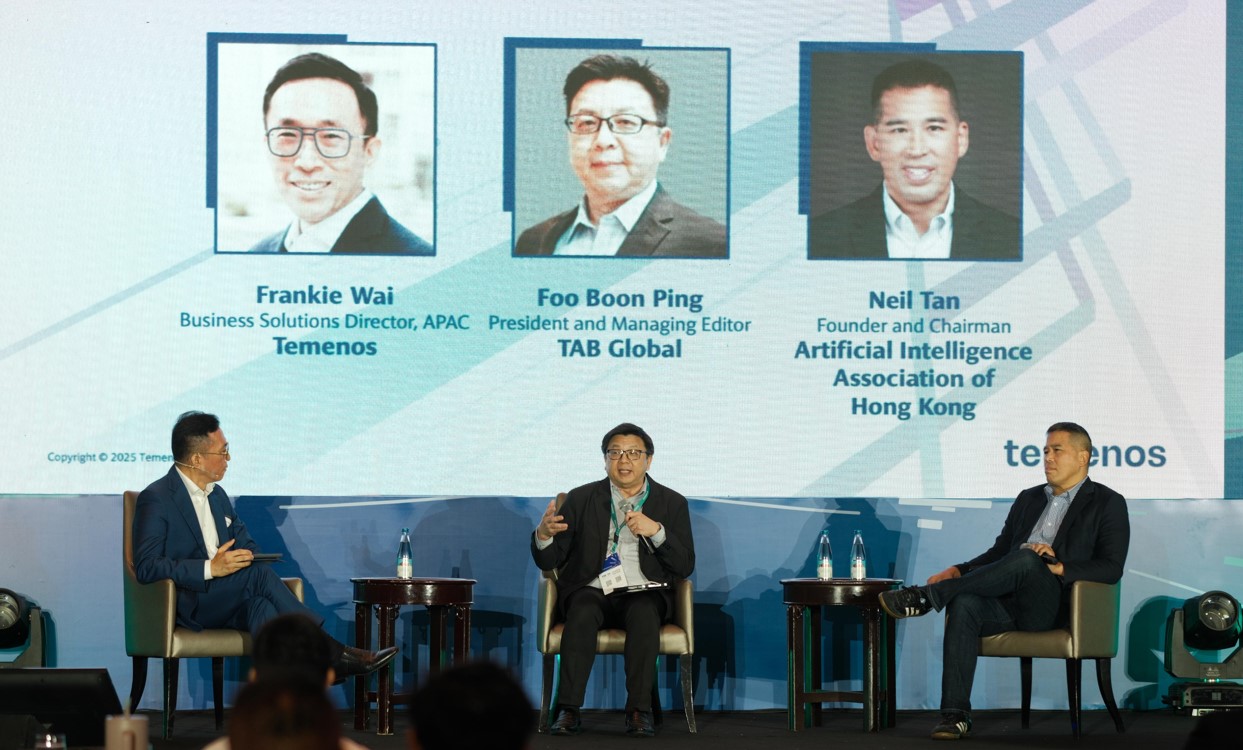
At the Temenos Regional Forum Asia Pacific, industry leaders examined how generative AI, digital platforms, and responsible innovation are reshaping banking across Asia Pacific. The discussion featured Frankie Wai (Temenos), Foo Boon Ping (TAB Global), and Neil Tan (Artificial Intelligence Association of Hong Kong), highlighting strategic priorities for banking transformation.
The discussion revealed that 90% of institutions are exploring artificial intelligence not to replace human capabilities, but to augment operational effectiveness, reflecting an evolution from process digitization toward comprehensive business model reimagination.
We are witnessing a very powerful convergence. Generative AI, cloud-native platforms, digital-first expectations, and evolving governance demands are all reshaping the industry. We are not just digitizing processes, we are reimagining them to be faster, smarter and more human centered.”
— Frankie Wai, Business Solution Director, Temenos
Platform-Led Orchestration as Strategic Imperative
The banking industry is shifting from isolated changes to unified, platform-driven innovation, transforming how institutions engage customers.
“We see a decisive shift in the industry from siloed vertical transformation to horizontal platform-led orchestration,” explained Foo Boon Ping, President and Managing Director, TAB Global. Drawing from company’s research encompassing over a thousand banks annually, he added, “Cross-functional teams are forming to address client problems and find solutions in an increasingly complex and uncertain environment.”
This transformation moves banks beyond incremental technology upgrades toward comprehensive business model reinvention. Leading institutions across the region—including DBS, HDFC, CIMB, BPI, and Union Bank—are operationalizing digital strategies with a focus on measurable business value, discontinuing initiatives that fail to deliver tangible results.
AI Strategy: The Four Pillars Framework
Neil Tan’s framework provides a comprehensive methodology for AI implementation across four critical dimensions:
Performance Optimization forms the foundation, focusing on increasing revenue, reducing costs, and enhancing operational efficiency through automation and process improvement.
Personalization extends beyond basic segmentation to enable truly individualized banking experiences, leveraging AI to understand customer preferences and deliver relevant services at optimal moments.
Power encompasses creating entirely new business models through AI-enabled capabilities, representing the most transformative potential for new revenue streams and market positions.
Predictive Intelligence advances from reactive to proactive banking. This enables banks to anticipate needs and influence financial decisions through emotionally intelligent engagement.
What we’re seeing now is people doing different types of POCs where they’re not only trying to predict behaviour, but how you actually change behaviour. This is the way that you start to actually change behaviour, and that’s being driven by emotion.”
— Neil Tan, Founder and Chairman, Artificial Intelligence Association of Hong Kong
Governance as Foundation for Success
Only 11% of top-ranked banks successfully scale AI implementations, with governance serving as the critical differentiator. Leading institutions embed AI governance into product development as a design principle rather than compliance overlay.
“AI is presenting an emerging early-stage development. Banks that are looking at scaling, whether it’s generative AI or agentic AI, can’t scale if you don’t have the governance in place,” emphasized Foo Boon Ping. “Institutions with strong model governance, auditability, and risk frameworks are more confident and therefore faster in scaling AI users.”
The governance framework must address transparency and auditability, ensuring AI-driven decisions can be explained to regulators and customers, particularly important in regulated environments where trust serves as a multiplier of innovation.
Agentic AI and Advanced Applications
The evolution toward agentic AI enables sophisticated customer behavior modeling and simulation, transforming product development processes.
“In the agentic world, they are training actual consumer profiles,” explained Neil Tan. “They’re using MBTI as the basic profiles of personas, training the models to become those individuals, and then teams can actually build products and test them against these different personas without going out and spending months and millions of dollars doing market research.”
Roadmap for AI-Native Transformation
The journey from digital-enabled to AI-native banking requires systematic organizational transformation addressing cultural, technical, and strategic dimensions.
“It starts with people,” emphasized Neil Tan. “You really need to spearhead it with a cross-functional team that’s like a task force or committee, bringing different business units and functions together to get everybody’s buy-in.”
This human-centered approach recognizes that successful AI transformation requires cultural change management alongside technological implementation. The technical foundation centers on data governance and management capabilities, including traditional data management and emerging capabilities like synthetic data generation.
Strategic Priorities
Three critical priorities emerge for banking institutions:
AI Strategy Articulation becomes essential for communicating transformation vision to stakeholders, requiring clear narratives about how AI enhances business value and customer experience.
New Business Model Development represents opportunities for exponential growth through data assets and analytical capabilities beyond traditional banking services.
Employee Empowerment recognizes that front-line staff possess intimate customer knowledge that can inform AI strategy, ensuring transformation addresses real operational requirements.
Future Outlook
The successful banks of the future will combine technological sophistication with strategic focus, ensuring AI adoption serves clear business objectives while maintaining trust and ethical standards. The convergence of generative AI, cloud-native platforms, and governance frameworks creates unprecedented opportunities for institutions embracing comprehensive transformation with strategic discipline and customer-centricity.
The future of banking isn’t about just adopting the newest technology. Banks must prioritize initiatives based on clear business value, avoid initiative overload, and invest in scalable processes that they can industralize.”
— Foo Boon Ping, President and Managing Director, TAB Global

Temenos AI
Temenos leads responsible banking with AI-driven growth and efficiency.