
With the UK Government’s goal to double the size of the building society sector, mutuals are at an exciting inflection point.1 They may only represent 0.2% of UK businesses, but building societies have been growing steadily over recent years, contributing GBP 35 billion in Gross Value Added, and supporting over 1.5% of the economy. Since 2021, elevated inflation and competitive mortgage offers have been key growth drivers.
Still, the sector is not without challenges. Access to capital, for one, has historically been limited. Another is the longstanding and well-documented lack of proportionality when it comes to UK prudential regulation. But with the right policy support, strategy, and tools, they could grow by as much as 7.2% a year whilst maintaining – or even enhancing – their core values.
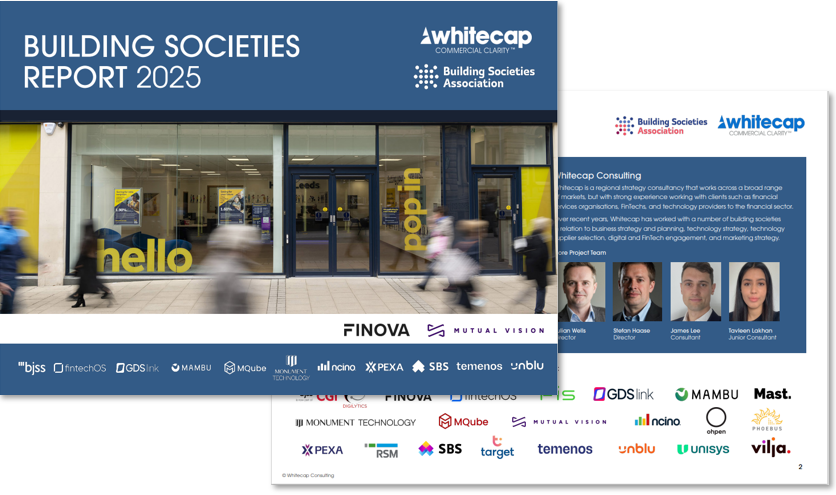
That’s one of the headline findings of the Building Societies Association’s (BSA) Building Societies Report 2025, which explores how the sector is poised to thrive in the years ahead. Technology will be a major driver, helping it to “enhance rather than replace customer relationships”, it says.
Technology’s role in building society growth
Although AI grabbed the spotlight, mobile platforms and apps were viewed as the top investment priorities over the next five years; after all, that is where the next generation of members are. By improving mobile experiences and self-service options, building societies can engage with younger audiences on a more meaningful level whilst also streamlining their day-to-day operations.
Behind the scenes, a shift in technology architecture is underway. Traditional “monolithic” approaches are being phased out and replaced by modular, cloud-native, and API-first systems. This new model is making it easier and more cost-efficient for building societies to innovate, giving them greater agility as they test new products and propositions. Cloud technology is also gaining traction as a cost-effective way to boost resilience and operational efficiency, particularly among smaller building societies with less complex needs.
With the BSA estimating that over half of IT budgets were allocated to maintaining legacy systems in 2023, there’s a clear need for building societies to adopt more flexible, integrated technology. This, it says, would enable them to leverage modern tools, particularly in areas like regulatory compliance.
Leveraging technology to navigate regulation and risk
As in the broader financial services sector, regulatory compliance continues to be a top priority for building societies. This is particularly the case as they have faced an expanding and increasingly complex landscape, navigating multiple changes at the same time. In fact, it’s often such a priority that many still rely on manual methods for compliance tasks – but this is slowly changing, with more and more building societies embracing automation to streamline compliance, improve accuracy, and reduce costs.
Consumer Duty regulation is emerging as a particularly promising area for technology-led improvements. Digital tools can test customer outcomes, identify vulnerable members, and improve service quality through smarter feedback analysis. And with increasingly sophisticated cybercrime and financial fraud, AI for transaction monitoring and enhancing KYC processes is also now being explored.
Adapting products to stay relevant
In line with the rest of the industry, building societies are also evolving their products, notably savings and mortgages, to provide greater value and support to their members. There’s notable optimism around the role of technology in simplifying and enhancing the mortgage process, particularly when it comes to origination.
Delivering a seamless experience for members and brokers is a critical part of this, with over 60% of executives highlighting intermediary-facing digital capabilities as a key focus over the next five years. Broker portals are an opportunity to simplify workflows, improve communication, and strengthen broker-customer relationships.
Technology as a foundation, not a differentiator
Although it’s not yet clear exactly how a doubling of the building society sector will be measured or indeed achieved, there’s no doubt about technology’s role in its future. So much so that technology is no longer viewed as a source of competitive advantage; rather, as a fundamental requirement for modern financial services providers to succeed.
But to support sustainable growth, building societies need core platforms that can scale with them, allow them to reach new markets with innovative, targeted products, and also address regulatory change efficiently but cautiously.
What is perhaps most striking about the 2025 report is that most of the executives interviewed said their current tech stack is only, “in part or in full no longer fit for purpose”, so it’s unsurprising that many are beginning to explore how to replace or update their systems.
A New Era for Building Societies
Discover how industry peers are innovating—and get insights to help you stay ahead of key trends.